How Much Sleep Do You Need by Age?
Find the relevant range or minimum, learn when naps count, and check the number against sleep quality and real daytime functioning.
The number changes with life stage
These are starting points. Read the full table for source, age boundary and whether naps count.
Use the age number as a starting point, not a personal score
For most people, the useful answer is a range or minimum plus a functioning check. The right question is not only “How many hours?” It is also “Was there enough opportunity, was sleep reasonably settled, and can this person function safely and comfortably during the day?”
Find the row first, then read what the number means
The table keeps the age boundary, hours, measurement period and source together. That matters because “12 hours” could mean overnight sleep, a full 24-hour total, or a broad reference rather than a formal consensus recommendation.
| Age | Guidance | How to count it | Source and meaning |
|---|---|---|---|
| 0–3 months | 14–17 hours | Across 24 hours | CDC summary, based on National Sleep Foundation guidance. AASM did not set a consensus range under 4 months because normal sleep varies widely and evidence was limited. |
| 4–12 months | 12–16 hours | Per 24 hours, including naps | AASM consensus range |
| 1–2 years | 11–14 hours | Per 24 hours, including naps | AASM consensus range |
| 3–5 years | 10–13 hours | Per 24 hours, including naps | AASM consensus range |
| 6–12 years | 9–12 hours | Per 24 hours | AASM consensus range |
| 13–17 years | 8–10 hours | Per 24 hours | CDC age band, based on AASM pediatric consensus |
| 18–60 years | 7 or more hours | Per night, regularly | AASM adult minimum, not a target ceiling |
| 61–64 years | 7–9 hours | Per night | CDC summary range |
| 65+ years | About 7–9 hours | Per night | National Institute on Aging guidance |
Why the oldest row may look different elsewhere: CDC's summary table lists 7–8 hours for ages 65 and older, while the National Institute on Aging says older adults need about 7–9 hours. This table uses the NIA range because its guidance directly addresses older adults. Neither source says that every person must hit one exact number.
A range, a minimum and a 24-hour total are not the same thing
Sleep charts become confusing when these labels disappear. Keep them attached to the number:
Range
A broad interval linked with health in a population. It is not a pass/fail test for one night.
Minimum
“Seven or more” for healthy adults does not mean exactly seven or that more than seven is wrong.
24-hour total
For younger ages, daytime naps can be part of the total. Do not compare only night sleep with a full-day number.
These numbers do not measure sleep quality
A person can spend enough time asleep and still wake unrefreshed if sleep is repeatedly interrupted, poorly timed, affected by breathing problems, or changed by illness, medicines, alcohol or another factor. The number is one part of the picture.
Count the whole day, notice the pattern, and keep safety separate
For babies from 4 months through preschool age, the AASM range explicitly includes naps. A toddler who sleeps 10 hours at night and naps for 2 hours has a 12-hour total. The night alone would undercount the guidance.
Under 4 months, sleep is especially variable and spread across day and night. A broad reference can help a caregiver notice a pattern, but it should not replace advice about feeding, growth, development or safe sleep. Ask a paediatric professional when a baby's sleep changes sharply or comes with feeding, breathing, growth or alertness concerns.
Look beyond the clock in older children too
Difficulty waking, frequent daytime sleepiness, falling asleep in class or transport, worsening attention, strong weekend catch-up and repeated irritability can suggest that the current opportunity or sleep quality deserves a closer look. These signs have many possible explanations; they do not diagnose a sleep disorder.
Eight to ten hours can be difficult to protect in real life
The AASM recommendation is 8–10 hours per 24 hours for ages 13–18. For a teen who must wake at 6:30 am, that range cannot fit unless the sleep window begins early enough. Homework, activities, social time, travel, device use and household routines can all compete with that opportunity.
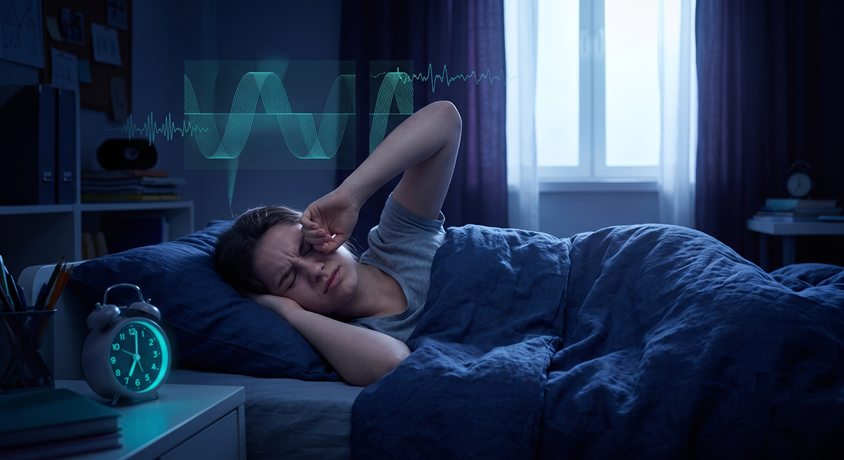

Instead of blaming one habit, write down the required wake time, approximate sleep time, evening commitments, night waking and weekend catch-up for seven days. That record makes it easier to see whether the main issue is too little opportunity, an irregular pattern, interrupted sleep or something that needs professional assessment.
“Seven or more” is not the same as “everyone needs exactly eight”
The AASM adult recommendation is at least 7 hours per night on a regular basis. It does not set an upper limit, and it notes that longer sleep may be appropriate for some young adults, people recovering from sleep loss and people who are ill. A number that fits one healthy adult may not describe another person's current situation.
Working-age adults
Start with at least seven hours, then judge whether the window supports alertness, mood, concentration and safe daily functioning.
Older adults
Needing much less sleep is not an automatic part of ageing. Sleep may become earlier, lighter or more interrupted while total need remains around seven to nine hours.
Pregnancy, illness or recovery
Sleep need and daytime rest can change. Use the general number as context and discuss persistent symptoms or major changes with a qualified professional.
Shift work
A duration target cannot remove body-clock conflict or workplace fatigue risk. Count total opportunity and use employer safety controls where relevant.
Check the range against one ordinary week
Do not judge your sleep from one late night, one lie-in or one wearable score. Use a fairly typical seven-day period and check three separate things:
- OpportunityRecord bedtime, estimated sleep time, final wake time and naps. Ask whether the schedule even allowed the age-appropriate amount.
- Continuity and regularityNote long awakenings, large day-to-day shifts, snoring or gasping reported by someone else, and factors such as caffeine, alcohol or medicines.
- Daytime functioningNotice sleepiness, unplanned dozing, concentration, mood, school or work performance, and whether driving or other safety-critical tasks feel affected.
More likely an opportunity problem
The available window is regularly shorter than the relevant guidance, while sleep starts reasonably once the person has a chance to sleep.
More likely worth looking beyond duration
The window appears sufficient, but sleep is repeatedly broken, unrefreshing, unusually timed, accompanied by breathing clues, or followed by persistent daytime impairment.
These are observation routes, not diagnoses. A short diary gives a clinician more useful context than a single number if the problem continues.
The calculator can turn a chosen target into clock options
After you choose a plausible sleep target from this guide, the homepage calculator can add or subtract fixed planning intervals to show possible bedtime or wake-time options. It cannot determine your biological sleep need, measure when you fell asleep, detect sleep quality or stages, or diagnose why you feel tired.
Get individual help when sleep affects safety or daily life
- Do not drive when sleepy. Arrange a safer way to travel or stop in a safe place; a duration chart cannot tell you that you are fit to drive.
- Discuss persistent daytime sleepiness, unplanned dozing, loud snoring, gasping, choking or witnessed breathing pauses with a qualified healthcare professional.
- Seek advice when very short or long sleep persists, changes suddenly, or comes with difficulty functioning at school, work or home.
- For babies and children, bring concerns about breathing, feeding, growth, development, unusual sleepiness or major pattern changes to a paediatric professional.
Sleep-by-age questions, answered plainly
How many hours of sleep do adults need?
The American Academy of Sleep Medicine recommends that healthy adults sleep seven or more hours per night regularly. This is a minimum recommendation, not a promise that exactly seven hours suits every adult.
How much sleep do teenagers need?
The AASM recommends eight to ten hours per 24 hours regularly for teenagers ages 13 to 18. A teen can still feel unwell within that range if sleep is irregular, interrupted, poorly timed or affected by a health problem.
Do naps count toward a child's sleep total?
Yes where the guidance says per 24 hours. The AASM ranges for ages 4 months through 5 years explicitly include naps. For school-age children and teens, the recommendation is also a 24-hour total.
How much sleep does a newborn need?
Sleep varies widely in babies younger than four months. CDC's summary lists 14 to 17 hours per 24 hours for ages 0 to 3 months, while the AASM did not issue a consensus recommendation for this age because normal patterns vary widely and evidence was limited.
Do older adults need less sleep?
Not necessarily. The National Institute on Aging says older adults need about the same amount as other adults, around seven to nine hours each night. Sleep may become lighter or more interrupted with age, which is different from needing much less sleep.
What if I regularly need much less or much more sleep?
One unusual night is not a diagnosis. If very short or long sleep continues, changes suddenly, or comes with daytime sleepiness, poor concentration, loud snoring, breathing pauses or safety problems, discuss it with a qualified healthcare professional.
Sources and review notes
- Centers for Disease Control and Prevention: About Sleep.
- American Academy of Sleep Medicine: Recommended Amount of Sleep for Pediatric Populations.
- American Academy of Sleep Medicine: Adult Sleep Duration Health Advisory.
- National Institute on Aging: Sleep and Older Adults.
- Centers for Disease Control and Prevention: Providing Care for Babies to Sleep Safely.
- National Highway Traffic Safety Administration: Drowsy Driving.
Evidence boundary: This article reports population guidance and helps readers interpret it. It does not estimate an individual's biological sleep need, diagnose a sleep disorder, prescribe an infant schedule or decide whether someone is safe to drive. Sources were reviewed on 1 September 2026. The two teen illustrations are pre-existing Sleep Manager assets, optimised for page performance and presented without causal or diagnostic labels.