What to Eat Before Bed: A Guide to Feeling Comfortable
You do not need a special food to make sleep happen. If you are hungry, a familiar snack can be reasonable. If you are already full, adding a "sleep food" is unlikely to be useful. Start with what is bothering you: hunger, fullness, heartburn or a late routine. [1, 2]
Find the option that fits tonight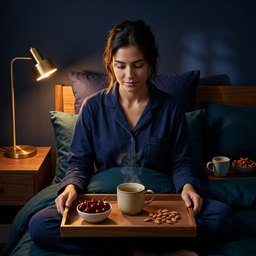
What is happening for you tonight?
There is a difference between being hungry and hoping a food will make you sleepy. This table helps you choose a next step without turning dinner into a test.
| Your situation | A practical option | Keep in mind |
|---|---|---|
| Hungry near bedtime | Have a familiar snack that suits you, rather than trying to sleep through hunger. | Choose for nourishment and comfort, not a promised sleep effect. Follow your care plan. |
| Already full | You do not need to add milk, nuts or another food just because it appears on a sleep list. | If fullness keeps recurring, consider whether a large meal could fit earlier in your day. |
| Heartburn after lying down | Look at meal-to-bed timing and repeatable triggers; read the reflux-specific advice. | A general snack suggestion does not replace reflux care. Persistent symptoms deserve assessment. |
| Home late from work | Plan food you can realistically access, including a meal break earlier when possible. | Do not miss necessary food to obey a clock. Night work may need individual advice. |
| Training early tomorrow | Have your normal evening nourishment and prepare the morning food your routine needs. | This is not a sports-fuelling plan. Do not under-eat to create an empty-stomach sleep window. |
| Thirsty or waking to use the bathroom | Meet thirst; consider whether a large amount of fluid just before bed is part of the pattern. | Do not deliberately dehydrate yourself or override prescribed fluids. |
The meal and reflux advice comes from public-health guidance. The work and training examples are practical planning ideas, not tested sleep treatments. [1, 2, 3]
Food and sleep: four different connections
Your digestive system does not switch off when you go to bed. Food can matter in several ways, and they call for different responses. A problem with evening coffee, for example, is not the same as lying down after a meal that leaves you uncomfortable.
Hunger: do you need food?
A snack may be sensible when hunger is keeping you from settling. A nutritious food does not need to be a special "sleep food" to be worth eating.
Comfort: do you feel too full or have heartburn?
Meal size, timing and your own symptom triggers may matter. Reflux means stomach contents coming back up into the food pipe; it is not simply ordinary digestion taking too long.
Caffeine or alcohol: is the drink part of it?
Caffeine can interfere with sleep. Alcohol may make you feel sleepy at first but can disturb sleep later. Neither issue is solved by adding a supposedly calming snack.
Fluids: are bathroom trips interrupting you?
Late drink quantities can be worth reviewing if you repeatedly wake to urinate. Persistent or new symptoms should not be managed by simply drinking less and less.
If you are hungry, keep the choice familiar
If you are hungry, begin with something you already know agrees with you: perhaps porridge, toast, yoghurt or another usual snack. These are options, not a required combination. Allergies, intolerances, appetite, culture, budget and your care plan matter more than a fashionable ingredient.
There is no single right bedtime portion. Choose enough to meet your needs without aiming for a deliberately tiny calorie allowance. If this question comes up every night, the bigger issue may be whether your daytime meals are practical and adequate, not which snack is best.
The illustrations below show ordinary food choices. They are not serving-size instructions, and the bed setting is not advice to eat lying down, especially if that brings on reflux.
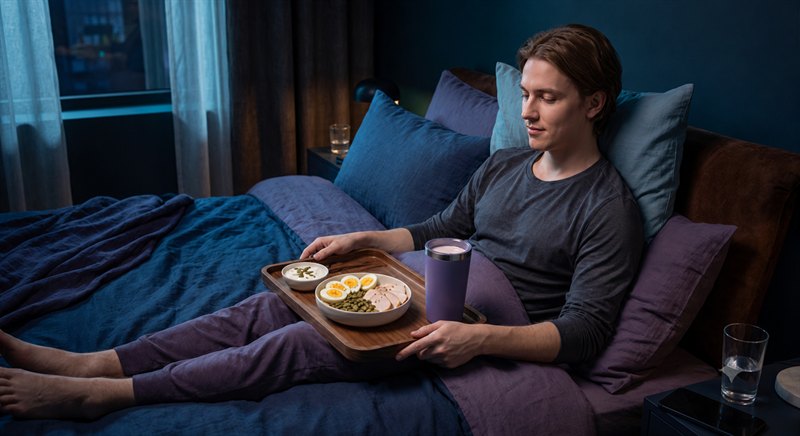
Familiar is a useful starting point
A food you enjoy and tolerate can be a simpler choice than buying a product marketed for sleep. You do not need to recreate this whole tray.
The pictured protein foods do not demonstrate faster sleep onset or better REM sleep.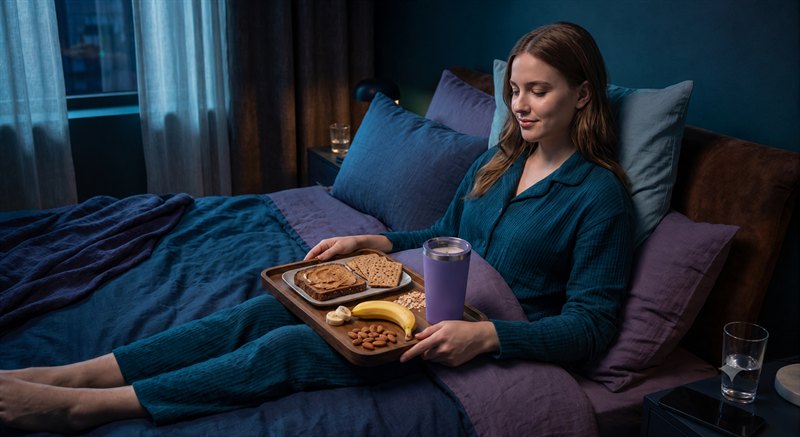
Carbohydrates are not automatically a problem
Toast or porridge can be an ordinary snack option. Choose ingredients that suit you; neither carbohydrates in general nor their absence guarantee a good night.
The toast, banana and nuts illustrate food, not a proven pathway to melatonin production.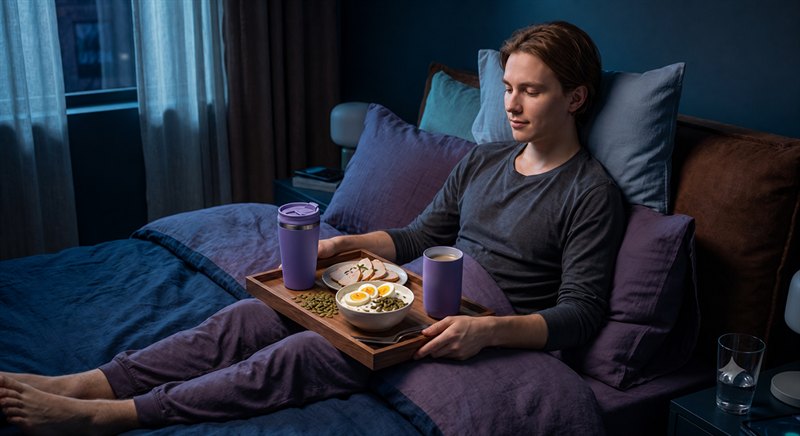
Let your needs guide the portion
The same amount will not suit every person or every evening. Someone finishing a long shift may need a meal, while someone who ate dinner may want a snack.
Milk, eggs, nuts and wheat can be unsuitable for some readers. Check ingredients rather than copying a picture.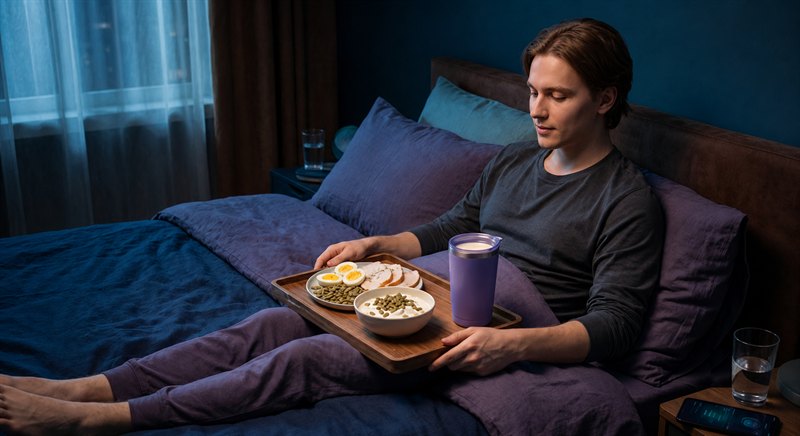
No ingredient needs to earn its place through sleep
Food can be valuable for nourishment and enjoyment without being a treatment. If you are comfortable and not hungry, there is no need to add a special bedtime food.
This is an ordinary food tray, not a measured dose of melatonin or a guaranteed sleep aid.Look for your triggers, not forbidden foods
Instead of asking "Which foods are forbidden?", ask "What repeatedly leaves me uncomfortable?" A large late meal is different from a normal portion of the same food earlier. One restless night cannot show whether dinner, stress, caffeine, pain or something else caused it.
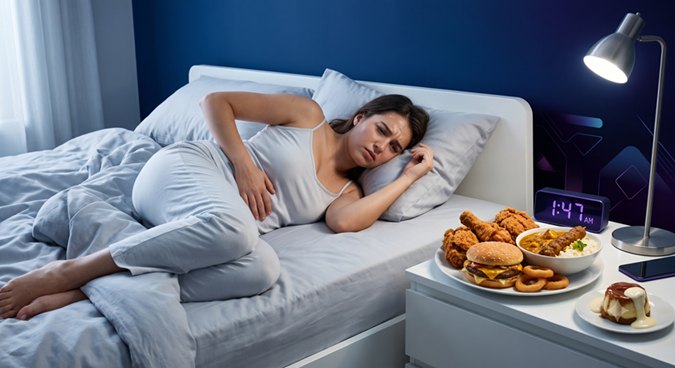
A large meal close to lying down
If a big meal regularly leaves you uncomfortable, see whether its timing or size can fit your day differently. Keep enough food across the day; the aim is comfort, not restriction. [1]
The scene and clock are illustrative. They do not set a meal deadline or show that all higher-fat foods are harmful.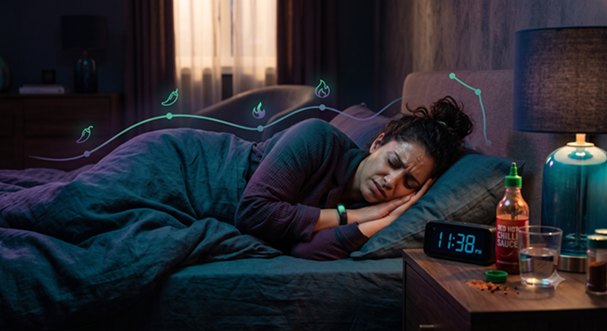
Spice that repeatedly bothers you
Spicy food is a possible reflux trigger for some people, not something everyone must ban. Follow a pattern of symptoms and your clinician's advice rather than a blanket rule. [2]
The heat lines are decorative, not a measurement of body temperature.
Acidic foods and reflux symptoms
Tomatoes or citrus can be linked with reflux symptoms in some people. If they do not bother you, this picture is not a reason to remove them. Persistent symptoms need more than a growing list of avoided foods. [2]
The pictured foods are possible personal triggers, not a measurement or diagnosis of reflux.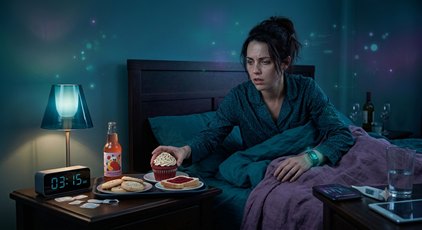
Dessert is not proof of the cause
A sweet food does not by itself explain a bad night. Consider the amount, your comfort and ingredients such as caffeine in chocolate. Avoid treating all sugar or refined carbohydrates as an automatic sleep problem.
The clock and food scene are not evidence that dessert causes waking at a particular time.If a food may be causing an allergy, do not deliberately eat it again as a sleep experiment. An allergy plan and medical advice take priority. [9]
Meal timing without a strict food curfew
For everyday sleep comfort
NHLBI advises avoiding heavy or large meals within a few hours of bedtime and notes that a light snack is okay. That is flexible habit guidance, not an instruction to sleep hungry or finish every kind of food at an exact hour. [1]
For reflux that happens at night or when lying down
NIDDK says eating meals at least three hours before lying down or going to bed may improve nighttime reflux symptoms. The three-hour advice belongs to that reflux context. It is not a universal food curfew, a digestion timer or a rule that overrides needed food or a prescribed meal plan. [2]
If work hours make that gap difficult, bring the schedule and symptoms to your clinician. Do not repeatedly lose sleep or miss meals while trying to satisfy competing rules.
Fit food around the day you actually have
A useful routine needs to survive work, caring responsibilities and the food you can actually get. Start with a doable arrangement, not an ideal timetable you cannot follow. These scenes illustrate choices; their clock times are not prescriptions.

When dinner can happen earlier
An earlier meal break may reduce the need for a very large meal just before bed. Keep the meal nourishing and enjoyable; an earlier time is an option, not a requirement to eat less.
The pictured clock does not specify the right dinner time for you.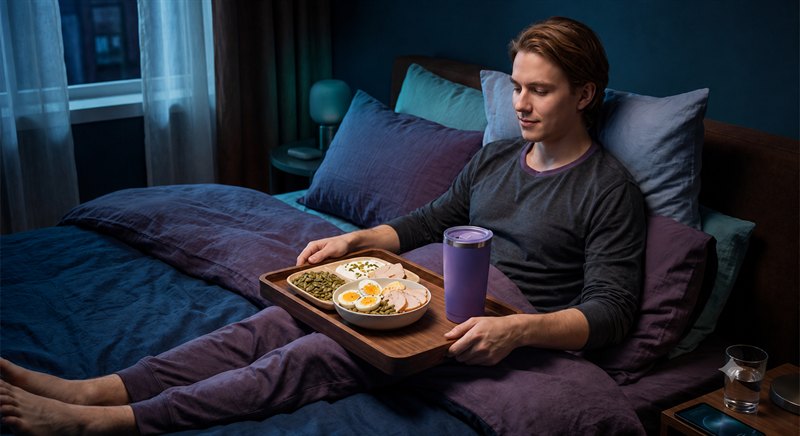
When you arrive home hungry
If a late shift leaves you needing food, eat according to your needs and care plan. Preparing something familiar can make the choice easier. Where possible, arrange a meal break during work too.
This is not a rule to replace a needed meal with a small snack or to eat one to two hours before every bedtime.
When you want a drink with your routine
A familiar drink can be enjoyable without being a remedy. Check caffeine and ingredients, and consider whether a large late drink leads to bathroom trips.
The cup does not identify a medicinal tea or establish a required 30-minute drinking window.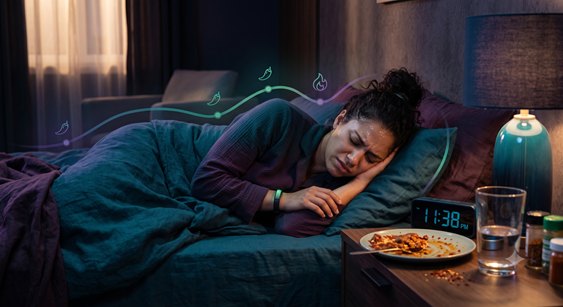
When the same uncomfortable night keeps repeating
Notice what can realistically change: meal access, timing or one familiar option. If you need food before early training, preserve that nourishment and prepare for the morning; do not chase a fasting window.
The food and decorative heat lines do not prove a sleep effect. This is not a sports-nutrition prescription.For night workers, clock time alone is particularly unhelpful: "before bed" may be in the morning. These examples support planning, not a shift-work treatment. The chronotype quiz can help you reflect on timing preferences, but it cannot calculate an ideal meal time.
Drinks, thirst and bathroom trips
Drink enough for your needs through the day. If you are thirsty at bedtime, do not ignore it just to obey a sleep rule. If you routinely drink a large amount just before bed and then wake to use the bathroom, consider moving some of that drinking earlier when practical. There is no fixed millilitre limit here. [3]
- Tea is not always caffeine-free. Check the label; coffee, many teas, energy drinks and some chocolate-containing drinks bring a separate caffeine question. [1]
- Alcohol is not a sleep drink. Feeling drowsy after drinking is different from getting uninterrupted sleep. Read the alcohol and sleep guide for that separate issue. [3]
- "Herbal" is not a reason to ignore your care plan. Check a new herbal product with a pharmacist or your care team if you take medicines or are pregnant; this article does not recommend herbal treatment.
- Prescribed fluids come first. If you have a fluid target or restriction, keep following it. New excessive thirst or repeated bathroom trips deserves assessment, not progressively stricter drinking rules.
Is caffeine the more likely thing to review?
If evening tea, coffee or energy drinks feature in your routine, look at them separately before changing several foods at once. The calculator gives a planning estimate with assumptions, not your measured caffeine level or a guaranteed safe cutoff.
Explore the caffeine estimateWhen your care plan comes first
These situations are reasons to adapt the advice with the right support, not to impose tighter food rules on yourself.
Diabetes or a low-glucose plan
Some diabetes medicines can make skipping or delaying food unsafe. Follow your meal, medicine and low-blood-glucose instructions. Do not treat suspected low glucose as an ordinary sleep-snack question or delay your prescribed response. [7]
Pregnancy
Heartburn and appetite can change. Smaller, regular meals may be helpful for discomfort, but protect pregnancy nutrition and discuss persistent symptoms with your maternity team. Do not start fasting to meet a bedtime target. [8]
Food allergies or intolerances
Use foods and ingredients that are safe for you. Milk, nuts, eggs or wheat in an example are not universal recommendations. Allergy and intolerance are different; follow your existing advice rather than testing a suspected allergen at home. [9]
Eating-disorder recovery or anxiety about food
Keep your recovery plan, including planned meals and snacks. Skip the observation exercise below if it encourages restriction, guilt or checking. Regular eating can be part of treatment; a sleep article must not undo that work. [10]
A prescribed diet, medicine schedule or fluid plan
Those instructions take priority. Ask your clinician, dietitian or pharmacist how to handle a bedtime discomfort problem within the plan rather than changing it yourself.
Try one small comfort change
You do not need to track food to use this article. If you want to explore a mild, everyday comfort problem, try one realistic adjustment across three ordinary nights. Three nights is our short observation suggestion, not a validated test or a promised time to improve.
Start only if this fits your health and care plan. Do not use this exercise to manage diabetes, a suspected allergy, an eating disorder or significant symptoms. Keep adequate food, fluids and time for sleep. No fasting, calorie counting, weighing food or deliberate symptom-provoking meals.
Choose one doable change
For example, prepare your usual snack so hunger does not turn into a last-minute scramble, or move an uncomfortably large dinner earlier when your day allows. Do not change several foods and your bedtime at once.
Notice comfort the next morning
A brief note is enough: hunger or fullness at bed, any heartburn, bathroom trips and how rested you feel. Note an unusual shift, stress, caffeine or alcohol too. No perfect sleep score is needed.
Keep only what is comfortable and practical
If the change fits your day and seems useful, you can keep it. If it adds hunger, symptoms or anxiety, stop. No clear change is a useful result too; it is not a reason to restrict more foods.
- A useful note
- "Had my usual meal earlier; comfortable at bed. Work was quieter too, so I cannot tell which made the difference."
- A conclusion to avoid
- "One better night proves this food fixes my sleep." A few nights cannot isolate a cause or diagnose reflux, an intolerance or a sleep disorder.
When food changes are not enough
Arrange medical advice for ongoing heartburn, repeated vomiting, difficulty swallowing, unexplained weight loss or symptoms that regularly disturb sleep. Persistent sleep trouble or severe daytime sleepiness also deserves assessment; changing dinner may not address the cause. [3, 11]
Get urgent medical help for vomiting blood or material that looks like coffee grounds, black tarry stools, or sudden swelling with breathing difficulty. Do not assume new or severe chest pain is just indigestion. These are not situations for a home food experiment. [9, 11]
For an appointment, bring a short description of what happens, when it started, meal-to-bed timing, medicines and any changes you have already tried. Useful detail is more helpful than a long list of foods blamed after isolated nights.
Food and sleep questions, answered simply
What foods help you sleep?
No food reliably puts everyone to sleep. If hunger is bothering you, a familiar snack you tolerate, such as porridge, toast or yoghurt, can be a practical choice. Check allergies and follow any prescribed diet. Research on particular foods is still too limited and varied to promise a sleep effect. [1, 6]
What foods should you avoid before bed?
There is no universal banned-food list. A large meal close to bed can be uncomfortable. If you have reflux, particular foods may repeatedly bring on symptoms, but your triggers may differ from someone else's. Look at the pattern rather than removing whole food groups after one difficult night. [1, 2]
How long before bed should you stop eating?
There is no universal food cutoff. General sleep guidance advises avoiding heavy meals within a few hours of bed and allows a light snack. For people with nighttime reflux symptoms, eating meals at least three hours before lying down may help. That reflux advice is not a fasting rule and must not replace a medical meal plan. [1, 2]
Is it okay to go to bed hungry?
You do not have to ignore hunger to follow a sleep rule. If you need food, choose something familiar that fits your needs and care plan. If you are comfortable and not hungry, you do not need to add a special bedtime snack. With diabetes, suspected low blood glucose or an eating-disorder recovery plan, follow your existing instructions rather than this general guide. [1, 7, 10]
Does cheese cause nightmares?
Cheese has not been established as a general cause of nightmares. A 2025 survey linked reported lactose intolerance and digestive symptoms with nightmares, but it did not assign people cheese or prove that cheese caused their dreams. If dairy repeatedly causes discomfort, discuss that pattern instead of assuming every bad dream came from dinner. [12]
What should I drink before bed for better sleep?
No drink guarantees better sleep. Water can meet thirst, while a familiar caffeine-free drink may be part of a comfortable routine. Check the ingredients: many teas contain caffeine. If drinks lead to repeated bathroom trips, look at late quantities without deliberately dehydrating yourself. Follow any prescribed fluid plan. [1, 3]
Can fasting or skipping dinner improve sleep?
Fasting is not a dependable sleep treatment. A review of time-restricted eating trials found mixed sleep results. Do not skip needed food or extend a fast to chase better sleep, especially if medicines, pregnancy or a recovery plan affect when you need to eat. [5, 7, 8, 10]
Sources and review notes
Numbers beside the advice refer to these sources. Public guidance, food studies and supplement studies answer different questions; none turns a pictured snack into a guaranteed sleep treatment.
- NHLBI: Healthy Sleep Habits. General guidance on large meals, light snacks and caffeine; not a required portion or universal food cutoff.
- NIDDK: Eating, Diet, and Nutrition for GERD. Individual triggers and the at-least-three-hour meal gap for nighttime reflux symptoms, not all adults.
- NHLBI: Insomnia, Treatment. Context for late fluids, alcohol and persistent sleep problems; habits are not a substitute for appropriate treatment.
- Saidi and colleagues, 2024: chrono-nutrition and sleep review. Varied, developing evidence on meal timing. Shift workers and eating-disorder populations were excluded; no universal schedule was established.
- Bohlman and colleagues, 2024: time-restricted eating and sleep. Review of six randomized trials with mixed sleep findings, not a reason to prescribe fasting.
- Food and nutrient evidence: Effects of Diet on Sleep Quality, 2016; tryptophan supplementation review, 2022; magnesium and sleep systematic review, 2022. Limited or varied findings; supplement evidence cannot prescribe a normal food portion.
- NIDDK: Low Blood Glucose. Meal timing, medicines and existing management plans take priority over general bedtime advice.
- NHS: Indigestion and Heartburn in Pregnancy. Pregnancy-specific guidance and when to seek maternity advice.
- NHS: Food Allergy. Ingredient safety, allergy versus intolerance and urgent reaction signs.
- NHS: Treatment for Binge Eating Disorder. Regular eating and avoiding dieting during treatment; the reader's own recovery plan remains primary.
- Assessment and urgent symptoms: NIDDK: GERD Symptoms and Causes and NIDDK: Gastrointestinal Bleeding Symptoms. Do not self-diagnose the cause of warning signs.
- Nielsen and colleagues, 2025: food sensitivity, sleep and dreaming. Student survey; associations with lactose intolerance do not prove cheese causes nightmares.
Editorial source check: 31 August 2026. Some research was assessed through abstracts or public summaries; this is not independent medical review. The three-night observation is a site-authored suggestion, not a clinical test. Existing illustrations are retained, with unsupported medical overlays removed from six; they are conceptual scenes, not patient photographs, measured outcomes or serving instructions.